Liberated Grooming
 Sue Williamson
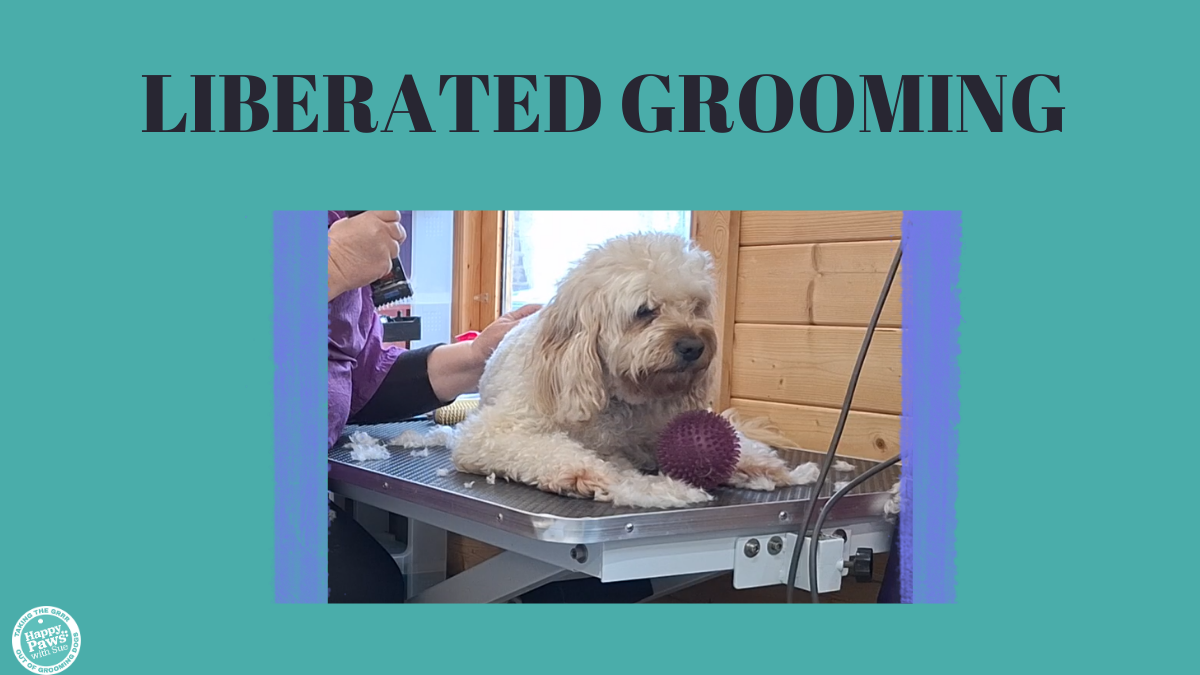
In this blog I will be discussing why the Taking the Grrr out of Grooming Dogs approach is so liberating for both groomers and dogs
The liberation of a welfare‑first groom
Last night I had a revelation: the Taking the Grrr approach isn’t just a technique — it’s liberation. It frees groomers from the industry’s need for perfection and lets us prioritise what actually matters: the dog’s comfort and emotional wellbeing.
Why the industry gets it wrong
Many in grooming world focusses on aesthetics: perfect angulation, sculpted faces, immaculate paws. That standard treats grooming like a beauty pageant, not a welfare task. Sending a dog home damp or with imperfect paws is judged as making the industry less professional, even when those “imperfections” protect the dog’s calm and safety.
Most pet owners don’t want a magazine cover dog. From my experience, they want a manageable coat that’s comfortable for their dog and realistic for their life. Many laugh that their dog will be muddy again within 24 hours — and they’re usually right. The industry’s ideal and the owner’s reality are often miles apart from anecdotal evidence.
What liberation looks like in practice
When we drop the pressure to be flawless, we can focus on practical, dog‑centred decisions:
- Fit‑for‑purpose cuts — trims that reduce matting and discomfort rather than chase a show look.
- Fear‑reducing tactics — short sessions, desensitisation, and small wins that build trust and a feeling of safety.
- Flexibility - sessions that allow new techniques to be found, discover what approach would suit him better, what could I try to help him be less fearful of something that needs to be done for welfare, what little trick can I come up with today to get a "fit for purpose"
- Functional priorities — drying, paw care, and coat management that support welfare over aesthetics.
That shift isn’t laziness. It’s strategic. It’s choosing the approach that keeps a nervous dog calm, safe, and more likely to tolerate future care.
Respect skill — but choose the right dog
I admire the craft of a perfect groom. It takes skill, patience, and artistry. But that skill belongs on dogs who enjoy the process. For anxious or grooming‑averse dogs, chasing perfection is cruelty dressed as craft.
Grooming is a welfare task first and a beauty task second. For anxious dogs, welfare must lead every decision.
A call for diversity and respect in our trade
The industry needs a spectrum of specialists: those who deliver show‑quality grooms, those that do a really good pet groom, and those who specialise in supporting fearful dogs. All roles are essential and deserve equal respect.
If we keep elevating only the aesthetic standard, we silence the needs of the dogs who most need our care.
Takeaway: Prioritise the right approach for every dog. Comfort, safety, and emotional wellbeing are the real measures of a great groom.
http://www.takingthegrrr.newzenler.com